
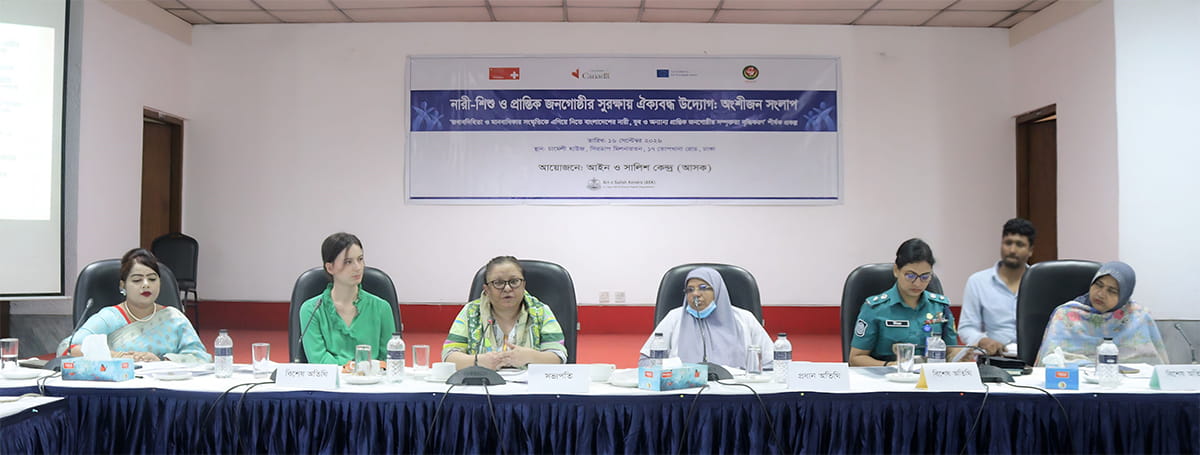
With the aim of promoting collective efforts to protect women, children and marginalised communities, Ain o Salish Kendra (ASK) organised a stakeholder dialogue titled “Collective Action for the Protection of Women, Children and Marginalised Communities: Stakeholder Dialogue” at the CIRDAP Auditorium in Dhaka. Representatives from government institutions, legal aid service providers, human rights organisations, non-governmental development organisations, the media, legal professionals and civil society participated in the dialogue.
At the beginning of the dialogue, Tahmina Rahman, Executive Director of Ain o Salish Kendra (ASK), delivered the welcome address and outlined the objectives and context of the event. She emphasised the need to strengthen coordination among relevant stakeholders and ensure accountable mechanisms to address existing challenges in protecting women, children and marginalised communities.
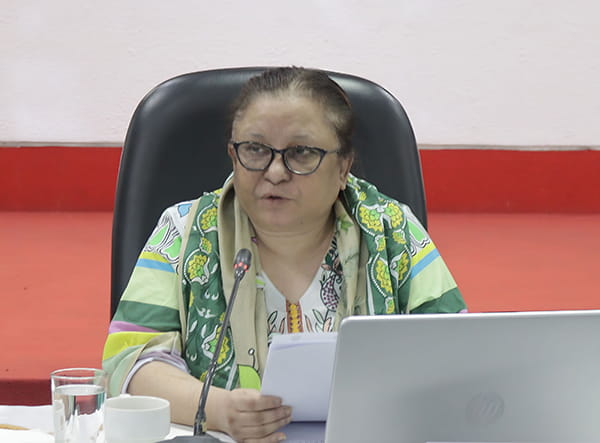 She said, “Although various laws, policies and government and non-government service mechanisms are in place to protect human rights, there are still gaps in effective implementation, timely redress, accessibility of services and inter-institutional coordination.” Tahmina Rahman further said, “The number of shelter homes in the country is inadequate and very limited. In addition to women, children and marginalised communities, persons with disabilities and third-gender citizens who have experienced violence also require shelter support.”
The dialogue was attended by Rejmin Sultana, Additional District and Sessions Judge and representative of the National Legal Aid Services Organisation; Mosammat Liza Begum, Deputy Commissioner of Police, Women Support and Investigation Division; Ivy Akter, Legal Officer, Department of Women Affairs; Dr Taiyeba Sultana, Coordinator, One-Stop Crisis Centre (OCC); Kamrun Nahar, Programme Manager, Naripokkho; Prabir Dutta, Assistant Director, District Employment and Manpower Office, Dhaka; and Katrina Koenig, Deputy Team Leader, Citizenship–Civic Engagement Fund (CEF) as special guests.
The speakers called for coordinated and effective initiatives involving government institutions, legal aid service providers, non-governmental development organisations, civil society and other stakeholders to ensure the rights and protection of women, children and other marginalised communities.
Government officials, NGO representatives and other stakeholders engaged in an open discussion on promoting human rights practices among all citizens, ensuring access to legal aid and making existing protection mechanisms more effective.
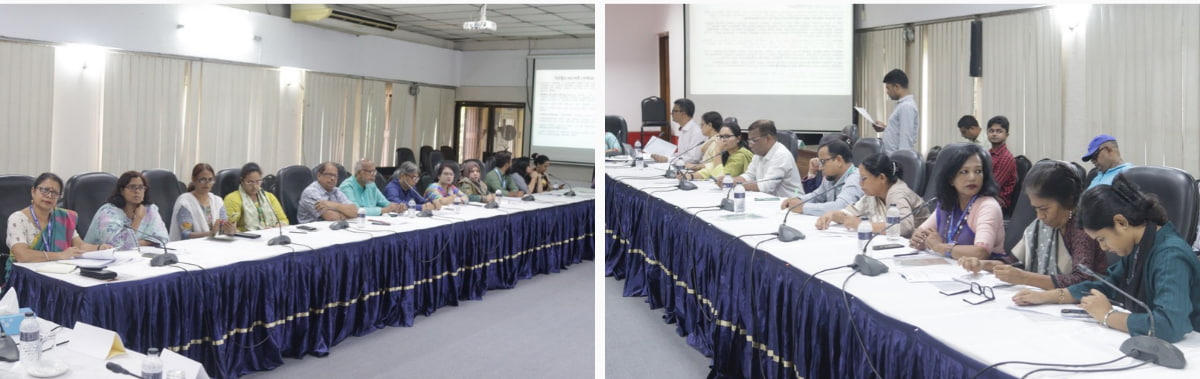
Among the recommendations put forward by participants were significantly increasing public awareness among marginalised communities, particularly in remote areas; ensuring the inclusion of persons with disabilities and third-gender people; strengthening referral mechanisms; and undertaking wider online awareness and outreach initiatives to promote and protect the rights of women, children and other marginalised communities.


 Visit Today : 1697
 Visit Yesterday : 1952
 Total Visit : 411989
 Who's Online : 11