

”Medical Negligence and Fraudulent Practices in Private Clinics:
Legal Status and Bangladesh Perspective”
ASK Legal and Advocacy and Policy Reform Unit carried out a study of medical negligence cases from 2009 to June 2013. Conducted by Tapos Bandhu Das, Advocate from Supreme Court.
Excerpt From Study : Full Study Available Below
Medical negligence mainly concerns negligent or rash act of medical professionals causing any injury to the patient. Medical negligence is a kind of professional misconduct on the part of a medical practitioner. In a strict sense the term, medical negligence, may not include professional misconduct or malpractice of other kinds such as fraudulent misrepresentation regarding eligibility or qualification, prescribing unnecessary drugs or tests for undue profit, taking undue advantage of the patient’s situation etc. But, while addressing medical negligence from a human rights perspective, the whole range of medical malpractice and misconduct including the professional negligence of medical professionals, has to be taken into consideration. Because, all these vices have one thing common in consequence; they cause serious violation of right to health and access to medical care. More importantly, these issues have a nexus at their origin and coexistence. Therefore, while dealing with medical negligence and right to health care, it is also essential to consider these aspects of medical services in order to make a comprehensive assessment. Fraudulent practice of the private clinics is also a matter of serious concern in Bangladesh. With due attention to the varied pattern of such fraudulent practices, it can be suggested that such activities should also come under the broader head of medical malpractice, since in addition to the criminal liability attached to these wrongs, they also cause grave violation of right to health care and access to appropriate treatment. This study aims at the broader aspect of right to health care and medical services with specific emphasis on the legal issues related to medical negligence and fraudulent practice of private clinics.
Background
This study is a legal research for law and policy reform under the legal advocacy and policy reform initiatives of Ain o Salish Kendra (ASK). Legal Advocacy and Policy Reform Unit of ASK is mainly responsible to carry on advocacy initiatives towards law and policy reform. Medical negligence is one of 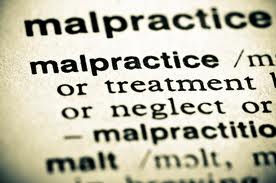 the issues that the Unit is consistently pursuing for more than a decade with a view to ensure people’s right to health care and access to medical services. The interventions of the Legal Advocacy Unit mainly focus on accountability of the health care providers and their regulatory bodies. Although, on many occasions and to a certain extent the interventions of ASK resulted in a positive outcome, the overall progress of human rights situation in health care sector is insignificant. Therefore, at this point, ASK feels it necessary to review the legal regime relating to medical and health care services, and have a recast of the limitations and challenges summarizing its experiences in this field. Hence, ASK decided to conduct this study titled as ‘Medical Negligence and Fraudulent Practice of Private Clinics: Legal Status and Bangladesh Perspective’.
Executive Summary
Medical Negligence is an issue of serious human rights concern that directly affects right to life and right to health care. The term medical negligence generally refers to the negligent or rash act of medical professionals in violation of the duty of care they owe to their patient. In a broader sense of the term, or when medical negligence is referred to as an issue, it also includes other kinds of professional misconduct causing sufferings of the patients. Medical negligence, both in public and private health care sectors of Bangladesh, is a major human rights concern for which ASK has been engaged in advocacy for law and policy reform for more than a decade. This report is commissioned by the Legal Advocacy and Policy Reform Unit of ASK to ascertain the legal status of medical negligence and fraudulent practice in private clinics in the context of Bangladesh.
The overwhelming number of incidents of medical negligence mostly goes without any legal action, leading to a frustrating situation where public trust is completely lost on the medical service providers. As a human rights organisation, ASK has a strong mandate for protection and promotion of right to health and health care. The activities of ASK in this regard ranges from legal aid to advocacy for law and policy reform. ASK provides legal aid to the victims of medical negligence. Although the legal remedies available under the existing laws are limited or difficult to access, such efforts give a clear idea about the shortcoming of the existing law and the underlying difficulties in the judicial system. Besides, legal aid also serves to encourage the helpless and/or poor victims to assert their legal right to have proper treatment. In addition to legal aid ASK also conducts fact finding investigation on different allegations of medical negligence. ASK’s activities also include publication for raising awareness about medical negligence and its legal remedies.
In order to ascertain the legal status of medical negligence the existing legal regime has been studied in this report. The Constitution of Bangladesh recognizes right to health care and guarantees right to life. Bangladesh is also a party to a number of international instruments, under which the Government has an obligation to protect and promote right to health. The National Health Policy of 2011 has been analyzed in this report. It appears from the policy statements of the Government as enumerated in the Health Policy and other policies discussed in this report that although right to health has been given due importance in those policies, the issue of accountability in health care sector has not been dealt with adequately. The different laws relating to medical services have been analyzed in this report. The laws include the Vaccination Act, 1880; the Drugs Act, 1940; the Eye Surgery (Restriction) Ordinance, 1960; the Pharmacy Ordinance, 1976; the Drug (Control) Ordinance, 1982; the Medical Practice and Private Clinics and Laboratories (Regulation) Ordinance, 1982; the Bangladesh Unani and Ayurvedic Practitioners Ordinance, 1983; the Transplant of Organ in Human Body Act, 1999; the Safe Blood Transfusion Act, 2002; the Consumer Rights Protection Ordinance, 2008; the Bangladesh Medical and Dental Council Act, 2010. In addition to these laws, the relevant provisions of the Penal Code, 1860 have also been discussed that can be applied in different instances of medical negligence, malpractice and fraudulent activities of the private clinics and others. The provisions of the Code of Medical Ethics have also been discussed to analyze the standard of care and responsibilities of the medical professionals as adopted by the BMDC. There are certain gaps and missing provisions in the laws which have been separately discussed in this report. Nevertheless, it is worth mentioning that even though there are many provisions in the existing laws that can be applied to control, prevent or redress the negligent activities, those provisions are not generally observed to be applied due to irresponsibility or lethargy of the concerned monitoring authorities.
The available redresses or punitive actions under the existing laws have been discussed in this report. The remedies or actions include departmental proceeding, criminal action, civil suit for compensation, remedy under the Consumer Rights Protection Ordinance and judicial review. The departmental proceeding in cases of medical negligence seems very rare in Bangladesh. The BMDC, as a regulatory body of physicians and dentists and medical assistants, is legally empowered to initiate such proceedings. But unfortunately, such proceedings have not been observed to be initiated by the BMDC to bring in discipline in the profession. Criminal action can be taken in appropriate cases of negligence. Civil suit for compensation can be a common option in all cases of medical negligence, which is also rarely resorted to by the victims. There is also a scope for claiming compensation under the Consumer Rights Protection Ordinance, 2008. Judicial review can be a strong weapon to address the monitoring aspects and accountability issues regarding medical negligence.
This report contains a comparative analysis of different national jurisdictions in addressing medical negligence. The comparative assessment aims at two different aspects; one is legislative arrangement and the other is judicial intervention. The experience of India, Nepal and Malaysia has been discussed in analyzing the legislative arrangement and legal practices to address medical negligence. For judicial intervention regarding right to health care, two case studies from India and South Africa has been presented and discussed in this report. The report finally offers a set of recommendations for legal and policy level intervention and improvement of existing practice. An accountable system of medical administration coupled with effective legal arrangements, under the surveillance of a vigilant civil society can establish a safe and sensible health care system in Bangladesh.
Full Report :
” 304 dead from reported medical negligence in four years and a half ”
As reported in Newage newspaper – Click for Link to Article



 Visit Today : 261
 Visit Yesterday : 2334
 Total Visit : 429615
 Who's Online : 8