
It has been more than 200 years since Women’s day, which was born out of women’s protest against unequal pay and inhumane working conditions. The fight for equal rights and a violence-free world continues but there are also significant stories of women’s achievements. This year, International Women’s Day (IWD) 2021 has been celebrated worldwide on 8 March with the theme “Women in leadership: Achieving an equal future in a COVID-19 world”; recognizing women’s achievements, as well as raising awareness on gender-based violence, to help forge a gender-equal and violence-free world, as we build back and recover from the pandemic.
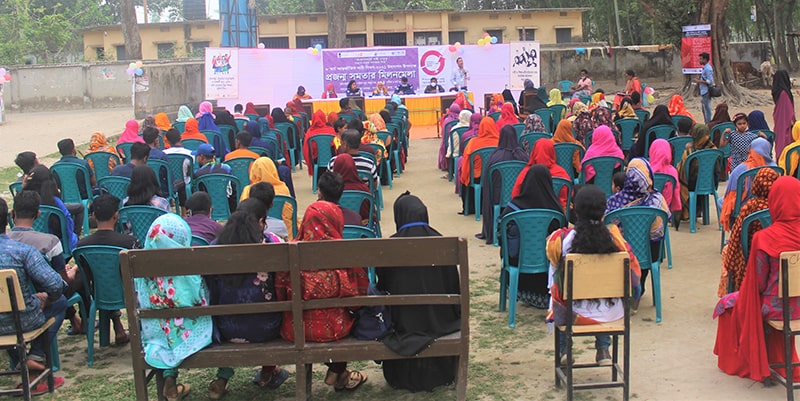
To achieve an equal and discrimination-free society, youth involvement is an essential approach. Strengthening voice, engagement, and partnerships of youth can lead the future towards a gender transformative society. ASTHA project has been working on men and boys engagement and it has over two thousand (Total: 2521, Bogura: 2070, Cox’s Bazar: 150, Jamalpur: 75, Patuakhali: 226) community youth volunteers in the four project districts who are working proactively to raise awareness on different GBV issues and also working as a ‘community watchdog’ to prevent any violent incidents.
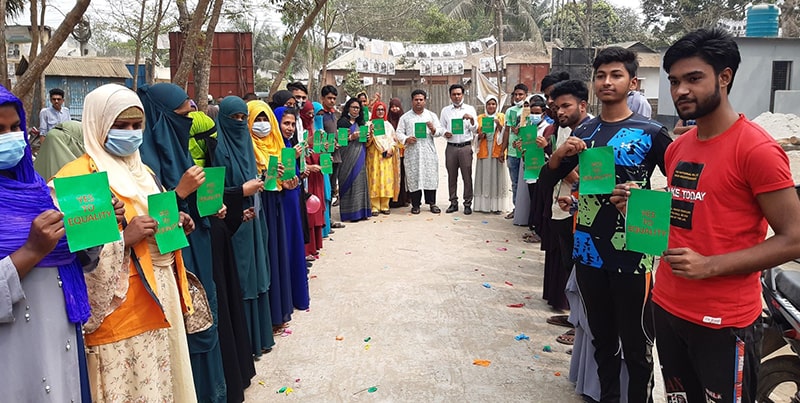
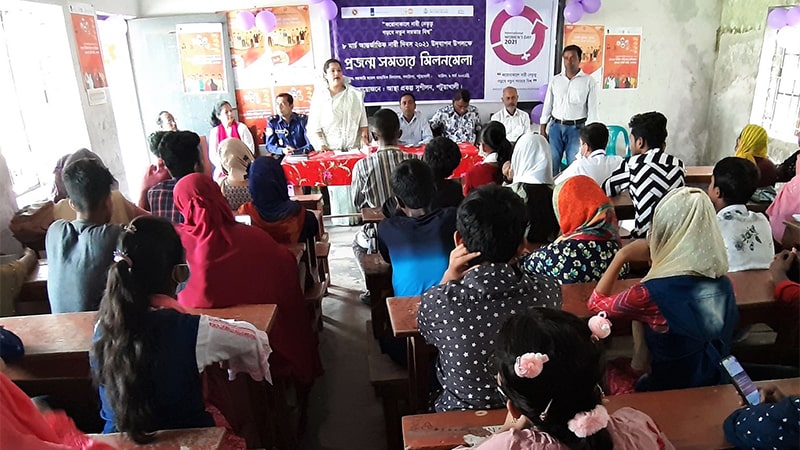
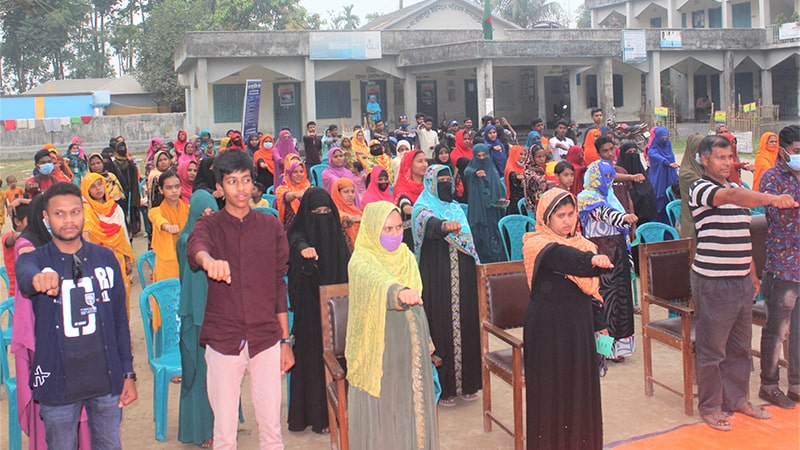
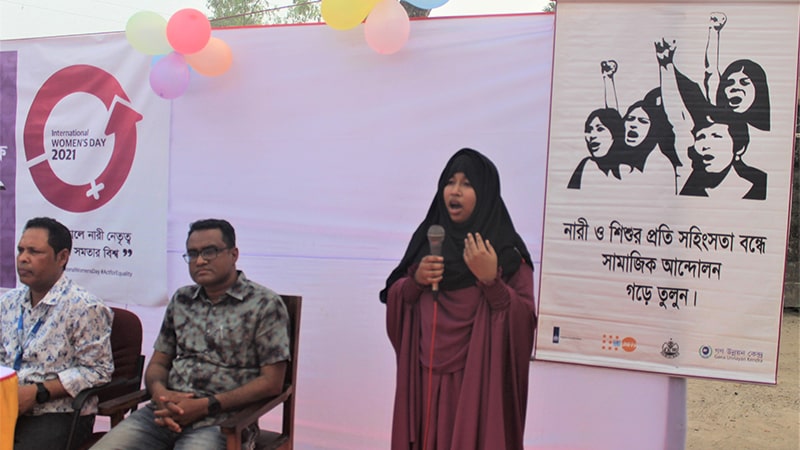
Making youth involvement a priority, Ain o Salish Kendra’s ASTHA project has celebrated IWD in the Upazila level of three of its project districts; Patuakhali, Bogura, and Jamalpur through a youth volunteer program named ‘Generation Equality Gathering’. These events took place on 9 March at the premises of Union Parishad and local schools of the respective districts. The events were organized with the support of the ASTHA project’s partner organizations- Gana Unnayan Kendra in Bogura; YPSA in Cox’s Bazar, Sabalamby Unnayan Samity (SUS) in Jamalpur, and Shushilan in Patuakhali.
Through Generation Equality campaigns, the ASTHA project seeks to incorporate both youth and local people by uniting communities to create awareness around GBV and ensure its sustainability in society.
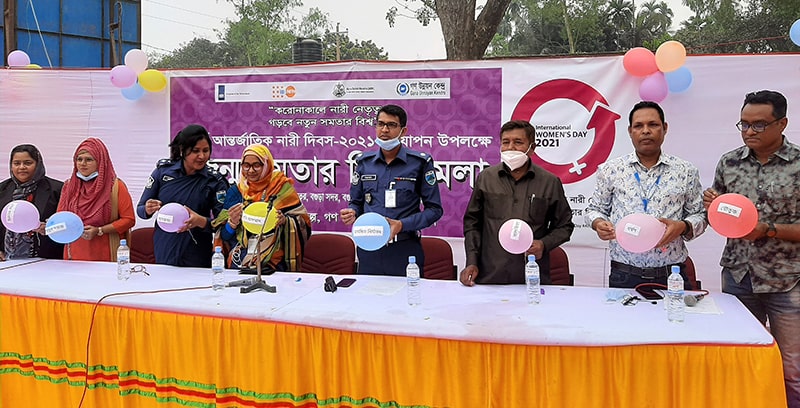
To fight against GBV; multi-sectoral collaboration, as well as youth involvement, is very crucial. A total of 200 people (Girls: 85, Boys: 53, Women: 45, and Men: 17) were present at these events which included not only the youth volunteers but also the actors and stakeholders from different multi-sectoral departments and CSOs like Additional Police Super, Sub-Inspector, Upazila Chairman, President of local VAW committee (NNPC), Psychological Counsellor of OCC, UNO Officers, teachers, ASTHA Project Coordinators and District Facilitators of UNFPA.
The Guests discussed the significance of International Women’s Day to achieve gender equality and how their departments serve to reduce discrimination, inequality, and GBV to achieve women’s empowerment. Sanjida Akter, Psychosocial Counselor of OCC in Bogura district urged to call toll-free number 999 for any emergency. She also mentioned, in case of reporting complaints, the Court Help Desk at the court premises and the Women Help Desk at Police stations are there to help survivors.
Mohammed Mohobbot Kobir, Officer in Charge (OC), Dewangonj Thana, Jamalpur District said “Women are humans, so women’s rights are human rights. True development is not possible leaving half of the population behind.”
Students, volunteers, and Case Workers of the ASTHA project shared their opinion on women’s day and gender discrimination based on their working experience in this project. Sammi Akter, a student of Galachipa Model Secondary School, Patuakhali shared, “Government has made many laws and taken measures to ensure equal rights for women, but patriarchal society is hindering women’s access to these rights. We should all fight for our rights.”
Md. Jasim Uddin, a student and youth volunteer from Jamalpur said that men of our society should change their patriarchal mindset because it is men who are mostly perpetrators of gender-based violence.
An ideal, violence-free family was also present at the Jamalpur event to encourage the youth. Molina, the wife, shared the experience of how the ASTHA project’s couple sessions changed her life, “I used to face constant domestic violence. One day, I came to the meeting of the ASTHA project (couple session) with my husband. They informed us about various laws and the harmful effects of gender-based violence. That made my husband aware and slowly he and my mother-in-law started to change. They behave well with me now. Thanks to the ASTHA project for everything. Now we are respected in our community as a violence-free couple.”
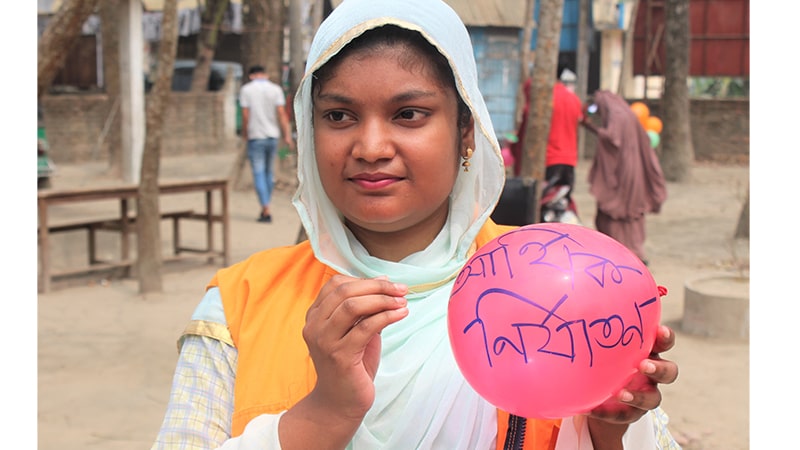
Various activities were carried out to make this campaign more interactive and impactful. Participants took an oath on equality to never do gender discrimination and always take a unified stand against gender-based violence. At the end of the oath, everyone raised the green cards saying “YES to EQUALITY”; in solidarity with the cause. ASTHA project arranged an interesting and symbolic balloon popping session for participants. Different social norms and practices that perpetuate violence against women like dowry, early marriage, inequality, patriarchy, etc. were written on the balloons. Guests, students, participants popped these as a symbol of rooting out these from the society.
These events have raised awareness among the young people on the multi-sectoral public services, toll-free numbers to report GBV cases, and also demerits of different harmful social norms and practices.
A total of 9 local print and online newspapers featured this youth campaign event.
With the technical support of the United Nations Population Fund (UNFPA), Ain o Salish Kendra (ASK) is implementing the ASTHA project with the funding from the Embassy of the Kingdom of the Netherlands (EKN), which works to prevent and respond to Gender-Based Violence (GBV) through strengthening access to multi-sectoral public services.


 Visit Today : 263
 Visit Yesterday : 1445
 Total Visit : 397125
 Who's Online : 11