
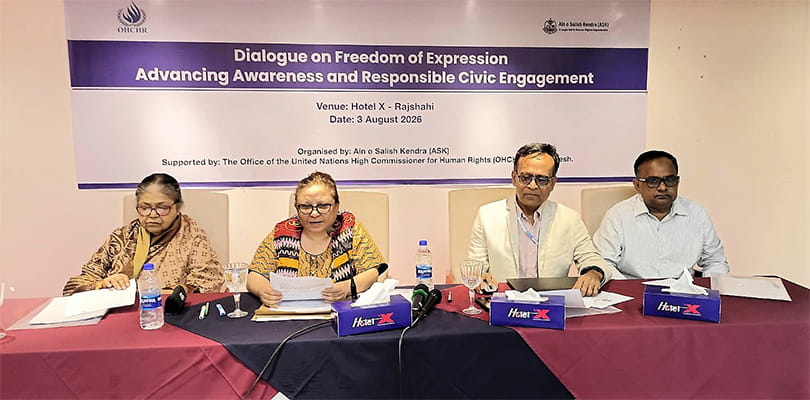
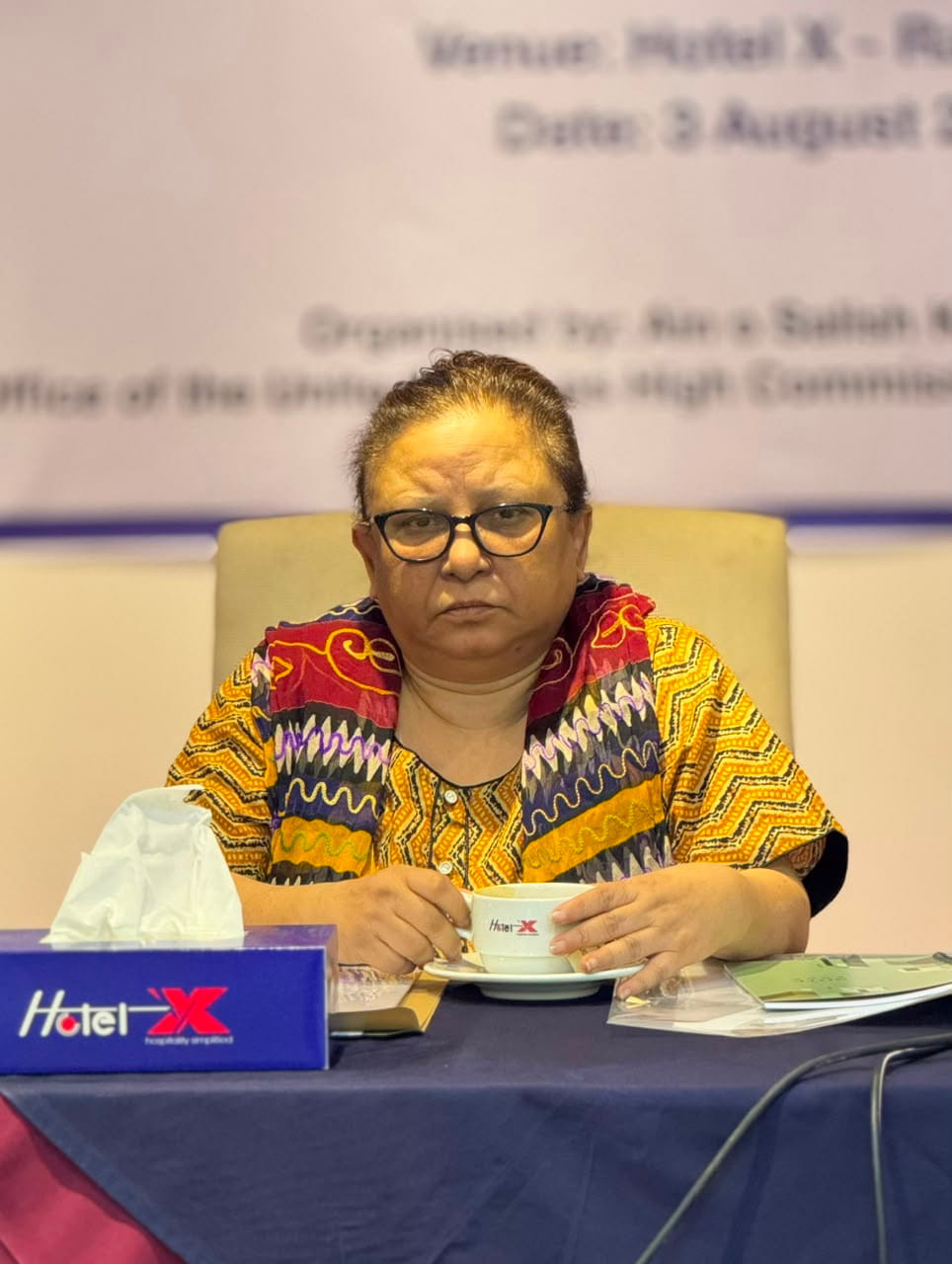
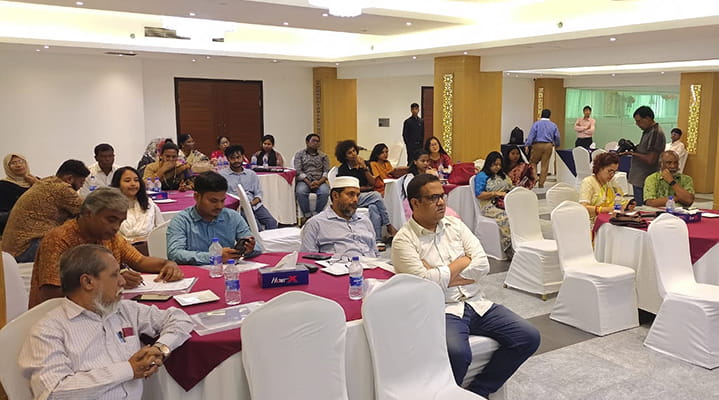
Ain o Salish Kendra (ASK), in collaboration with the Office of the United Nations High Commissioner for Human Rights (OHCHR) in Bangladesh, organised a dialogue on 3 August 2026 at the conference room of Hotel X in Rajshahi to strengthen freedom of expression, democratic values and responsible civic participation. A total of 27 participants, including human rights defenders, journalists, lawyers, academics, students and civil society representatives, took part in the dialogue.
Tahmina Rahman, Executive Director of Ain o Salish Kendra (ASK), delivered the keynote presentation. She stated that freedom of expression is a fundamental human right and one of the foundations of democracy, accountability, the rule of law and a participatory system of governance. She emphasised that it is the responsibility of the state to ensure an environment where people can express their views lawfully without fear of intimidation, harassment or retaliation. She further noted that in today’s digital landscape, rumours, misinformation, hate speech, online harassment and misleading content generated using artificial intelligence have emerged as new challenges. Addressing these challenges requires not only appropriate legal measures but also stronger digital literacy, information verification skills and responsible civic practices.
Md Zahid Hossain, Human Rights Officer at the Office of the United Nations High Commissioner for Human Rights (OHCHR) in Bangladesh, delivered a presentation titled “Fundamental Principles of Human Rights: Freedom of Expression and Hate Speech.” He discussed the fundamental principles of human rights and the scope of freedom of expression while distinguishing between freedom of expression and hate speech. He noted that although freedom of expression is a fundamental human right, it does not provide a licence to undermine the rights, dignity or security of others. In accordance with international human rights standards, alongside protecting freedom of expression, it is also essential to take human rights-based and lawful measures to prevent hate speech that incites discrimination, hostility or violence. He also provided a detailed overview of the Rabat Plan of Action in this regard.
Ain o Salish Kendra (ASK) expressed hope that such dialogues will contribute to building a more human rights-based, tolerant and democratic Bangladesh by raising public awareness of freedom of expression, strengthening responsible civic participation and expanding opportunities for constructive dialogue among the state, civil society, the media and other stakeholders.



 Visit Today : 352
 Visit Yesterday : 1917
 Total Visit : 422920
 Who's Online : 11