
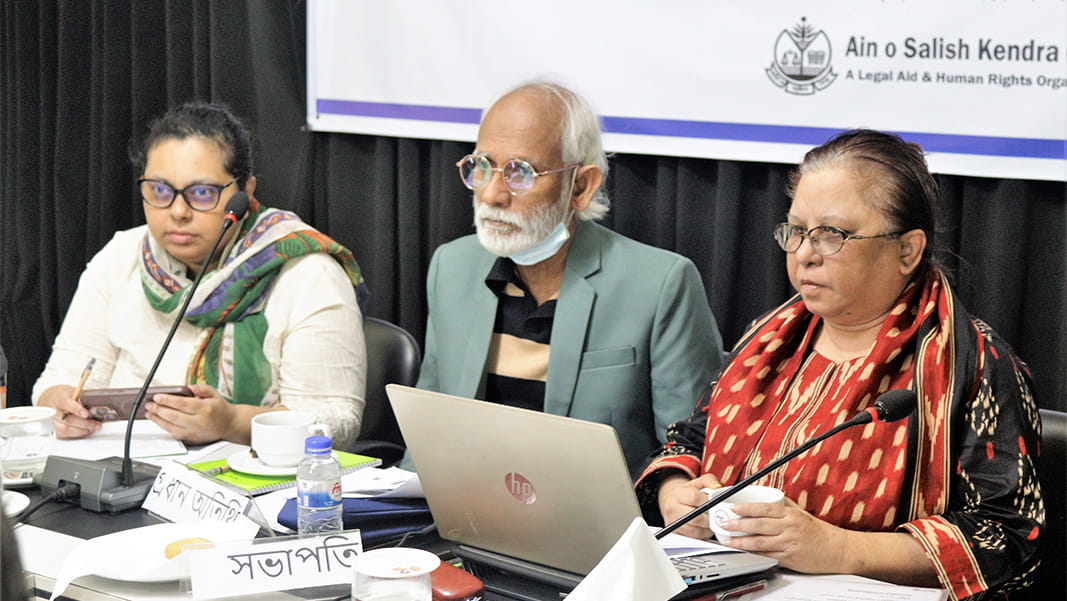
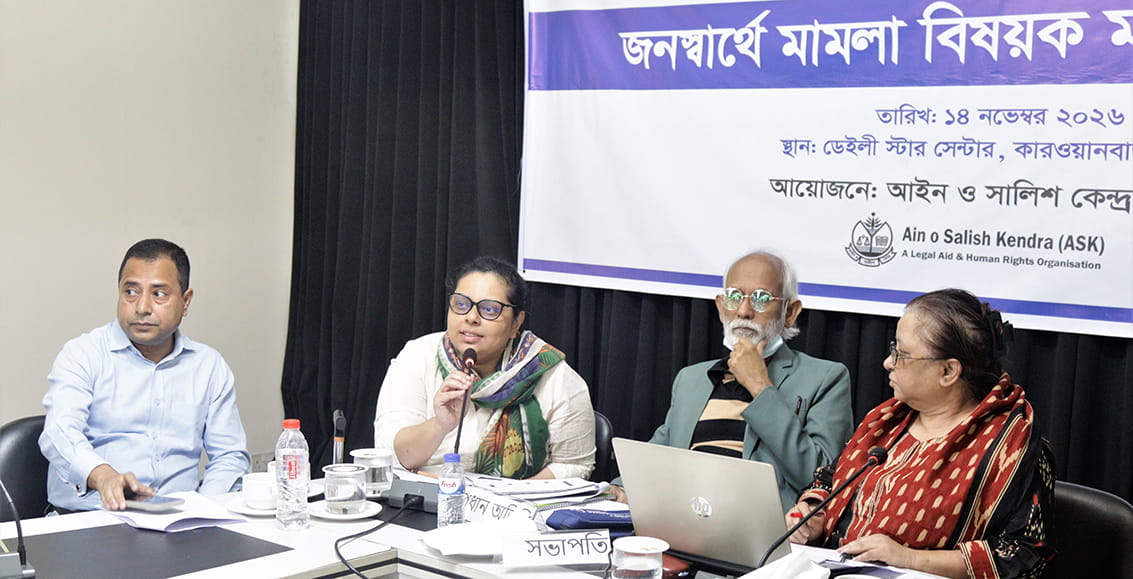
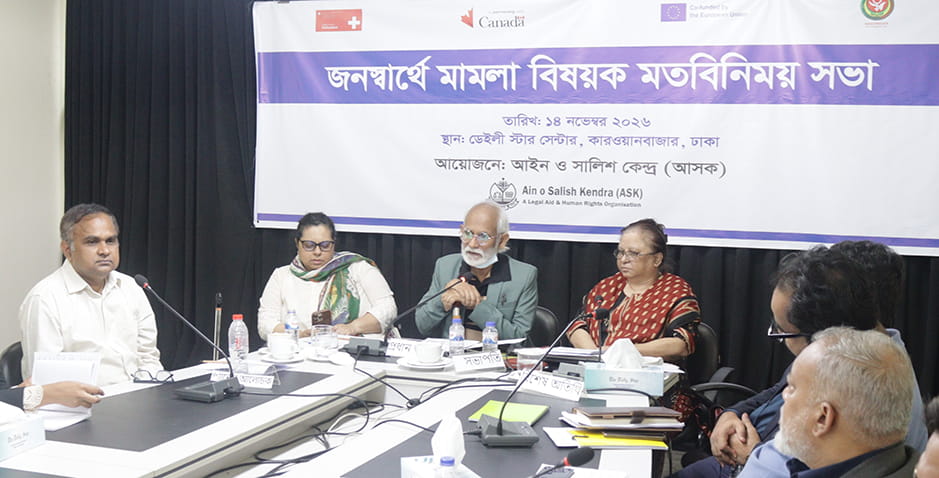
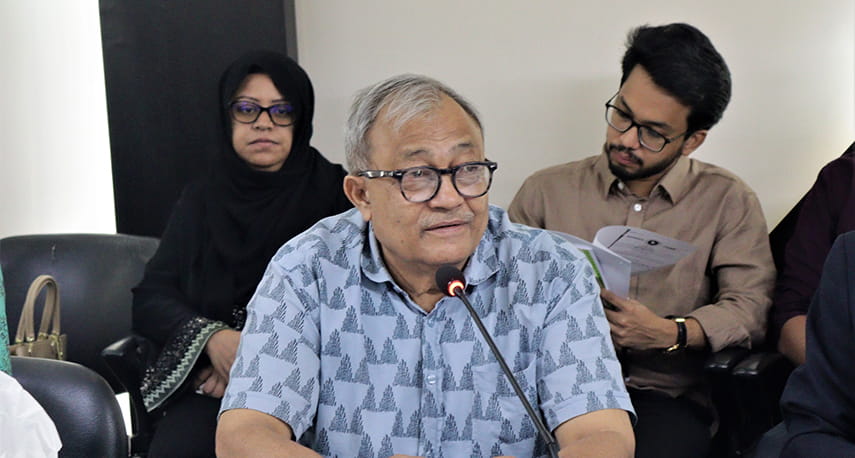
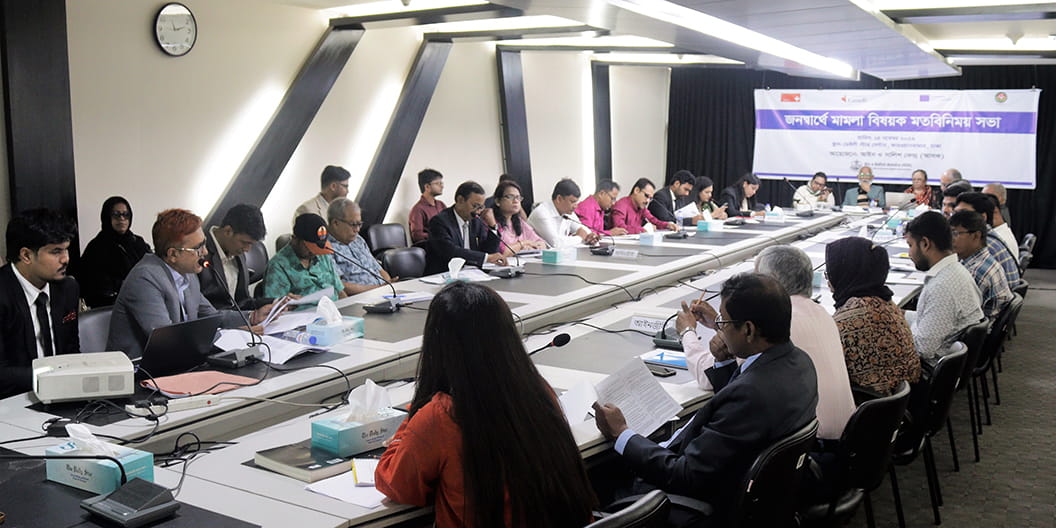
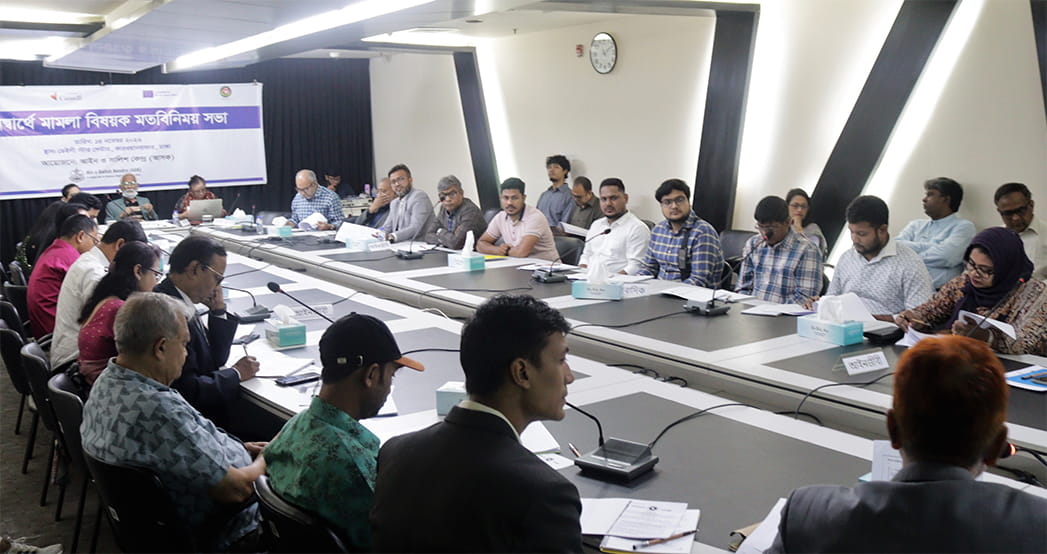
14 November 2026, Ain o Salish Kendra (ASK) organised a roundtable dialogue on Public Interest Litigation (PIL) at the Azimur Rahman Conference Hall, The Daily Star Centre, Dhaka. ASK Chairperson and Supreme Court Senior Advocate Z. I. Khan Panna attended as chief guest.
ASK Executive Director Tahmina Rahman moderated the roundtable dialogue session. She said that although the Constitution and existing laws guarantee fundamental rights, fear, financial constraints, social standing and pressure from powerful parties often stop victims, especially marginalized people, from seeking justice. Tahmina Rahman noted that PIL brings the concerns of society’s unheard voices to the state and subjects state institutions to judicial accountability.
Referring to the Torture and Death in Custody (Prevention) Act, 2013, chief guest Senior Advocate Z. I. Khan Panna said that enacting a law is not enough without effective enforcement. Survivors and their families often face insecurity, difficulty collecting evidence, obstacles in obtaining forensic reports and delays in investigations.
He called for a number of steps:
- Impartial and credible investigation of allegations of rights violations
- Safety for survivors, their families and witnesses
- Proper collection and preservation of information and scientific evidence
- Fewer delays in judicial processes, and monitoring of court directions and compensation
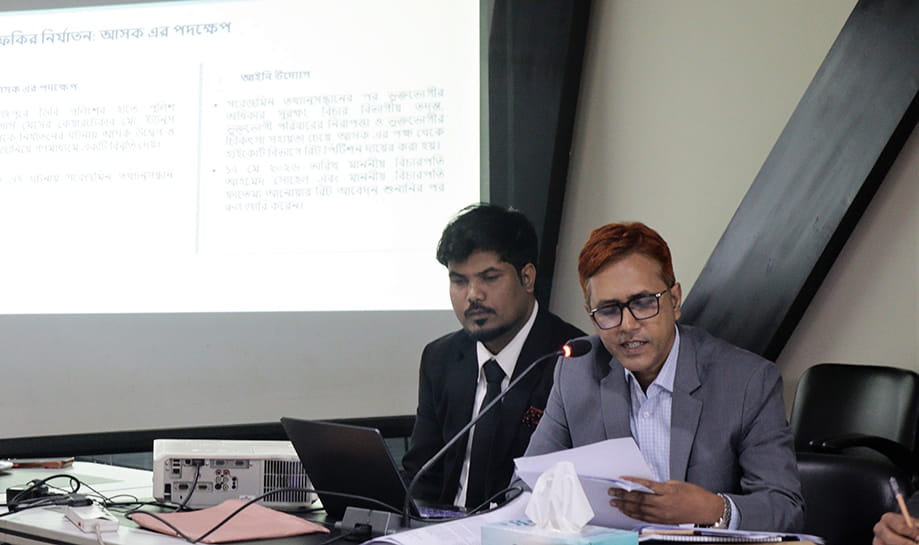
ASK staff lawyer Md. Shahinuzzaman was the main presenter. He presented the current situation, the documentation and the cases filed by ASK.
The consultation drew on ASK’s experience in the cases of Mirza Ishtiaque Ahmed, Md. Yunus Fakir, Shahadat Hossain Shyamol and Imtiaz Hossain Johnny. These cases show why impartial investigation, judicial remedy and implementation of decisions matter for every complaint of rights violation.
Special guest Barrister Nazia Kabir, Secretary General of ASK, said, “Protecting human rights is not the responsibility of any one institution or organization alone. It is our collective responsibility.” She urged lawyers, rights defenders, academics, the media and young people to take part.
Nur Khan Liton said “a provision should be explicitly added to the law to prohibit torture during custody. He pointed to delays in postmortems, the destruction of substantial evidence, and errors in the description in inquest reports.“
Dr. Zahid Iqbal said the Torture and Death in Custody law is carelessly drafted and has many loopholes, and that it does not follow the standards of other countries. Rafiq Ahmed of ALRD, Nighat Seema of BNWLA and senior advocates of the Supreme Court also shared their views at the programme.



 Visit Today : 1604
 Visit Yesterday : 2703
 Total Visit : 486320
 Who's Online : 13