
[See Press Coverage Below]
The purpose of the event was to have an open dialogue with stakeholders, so that the role of the UN Special Procedures can be understood better in how they could play an important function in recording and in turn addressing serious human rights violations.
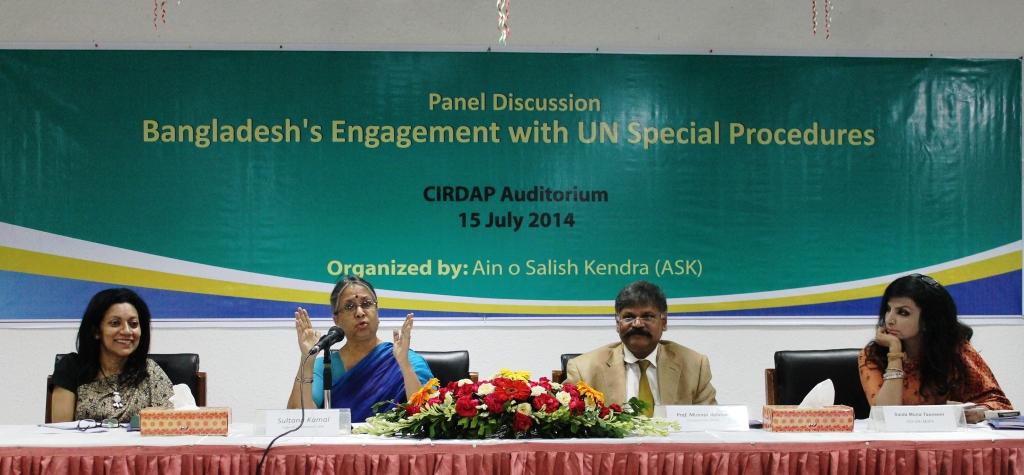
The discussion was titled “Bangladesh’s Engagement with the UN Special Procedures” on 15 July 2014 from 10.30 am to 01.00 pm at CIRDAP Auditorium, Topkhana Road, Dhaka.
UN Special Procedures Mechanism is a key human rights mechanism which ASK and other organisations in Bangladesh have been working with various Special Procedures. Drawing from the experience, ASK believes that the Country’s engagement with such procedures can be improved through consultations and dialogues between the Ministry of Foreign Affairs (MoFA), National Human Rights Commission (NHRC), other human rights organisations and those who take time to use this mechanism.
ASK Invited the Director-General UN and Human Rights, Ministry of Foreign Affairs (MoFA), Ms. Saida Muna Tasneem and Professor Mizanur Rahman, Chairperson of the National Human Rights Commission to elaborate on their roles and views.
The reports of UN Special Rapporteurs are particularly useful in terms of highlighting the roles and responsibilities of the State. Information is collected on a particular thematic area of violations and through the lens of the principle of due diligence, state action in preventing particular violations from occurring, protecting and providing remedies to the victims who have been subject to violence.
Sayeed Ahmed, Steering Committee Member of the Human Rights Forum Bangladesh set the scene of the Panel Discussion by presenting a few facts about an important mechanism for human rights violations advocacy in the Special Procedures – Visits from the Independant experts, UN Special Rapporteurs.
Click on Arrows Below to Navigate through the slides.
Dina M Siddiqui, Visiting Professor, BRAC University; highlighted the Special Rapporteurs Report on Violence Against Women in Bangladesh(Click on Highlighted Text).
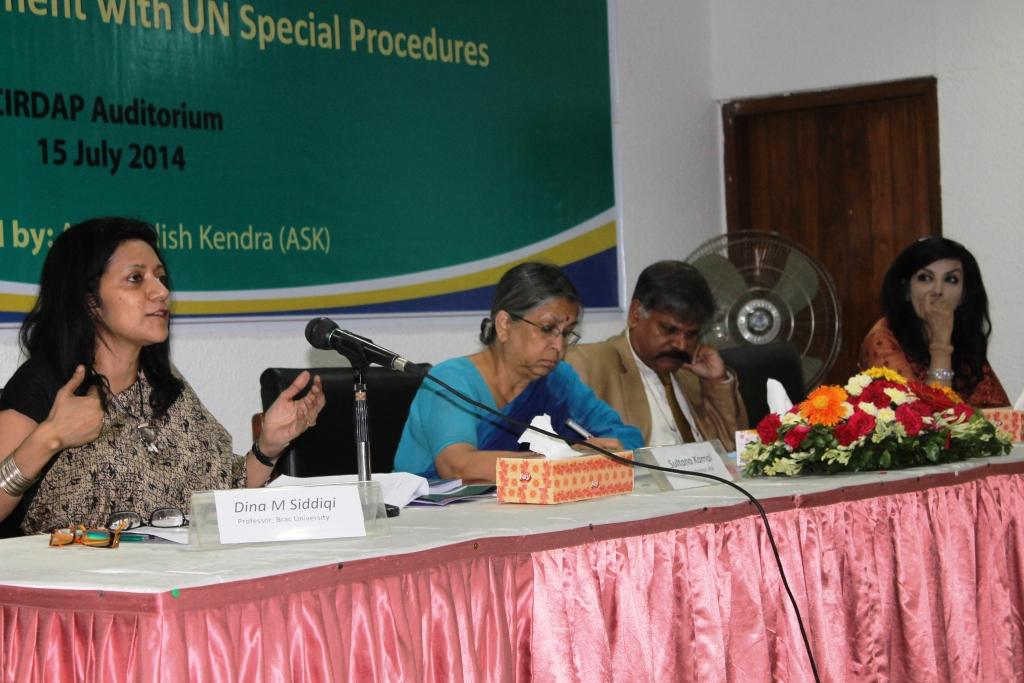
The Finding’s of the Special Rapporteurs Visit to Bangladesh in May 2013 was launched in April 2014. This report contains the findings of the Special Rapporteur on violence against women, its causes and consequences, following her visit to Bangladesh from 20 to 29 May 2013. It examines the situation of violence against women in the country, taking into account its causes and consequences, and implications for the effective exercise and enjoyment of human rights by women. It also discusses the State’s responses, through the lens of the principle of due diligence, to prevent such violence, protect and provide remedies to women who have been subjected to violence, and prosecute and punish the perpetrators.
Dina Siddiqi mentioned the importance of the Rapporteurs visits in to the country because it gave an all round, accurate view of the violations which were occurring first hand from the victims and grass roots activists or in the locations. She shared her view that the UN platforms were only limited to those who had access. She also added how the collection of cases and reporting was essential to proper monitoring of violations and how they were addressed.
Sultana Kamal, Executive Director of ASK, convened the Panel discussion. On Violence Against Women Rapporteur’s report, she spoke about why women are facing such high numbers of violations in Bangladesh despite the advancement and empowerment of women in society. Even though, women are secure about their rights now, it is the men who have been left behind in recognising the concept of women’s rights and equality.
With regards to the Rapporteur visits, she emphasised the importance of reporting as the Government were in denial of many human rights violations, they seemed to be in a ”mode of denial”. This process is needed to improve transparency and address impunity.
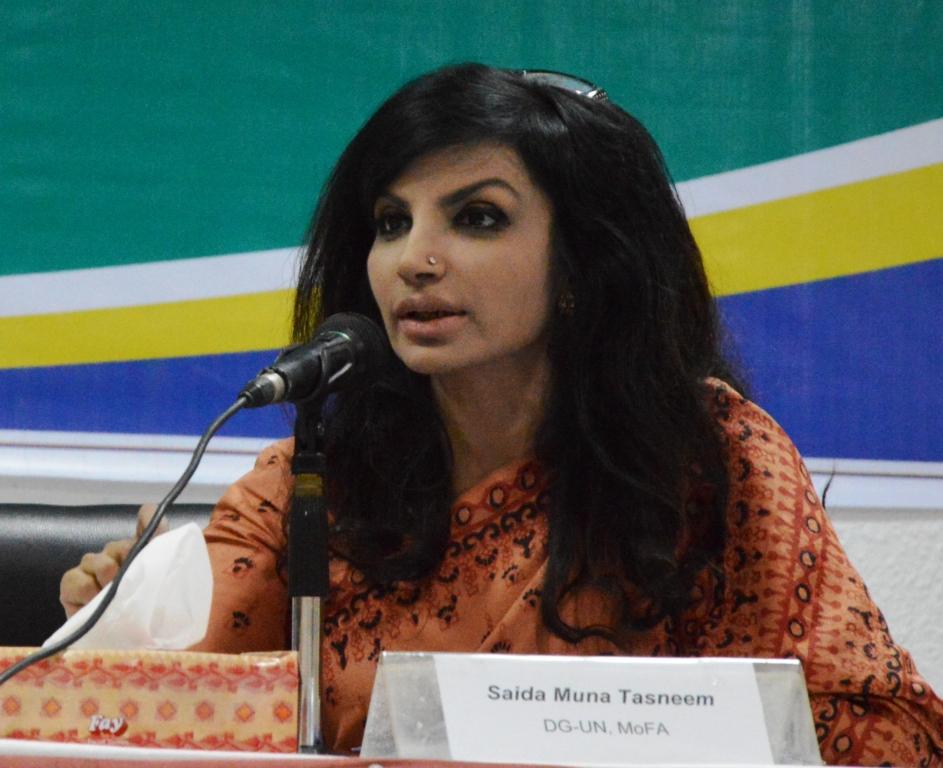
The Term ”Extrajudicial Killings” Does not Exist in Bangladesh
Saida Muna Tasneem conveyed how the Government were ”Knocking on the Doors” to the Special Rapporteurs for Sanitary and Poverty. She also stated sharply, the government was not in denial.
Interestingly she mentioned how it was difficult to report on violations because terms such as ”Extrajudicial Killings” did not exist.
In response to reporting and monitoring, Saida expressed how the Media were already reporting on violations.
Press Coverage of Event
গাজায় লংঘিত হচ্ছে মানবাধিকার -সুলতানা কামাল
মানবাধিকার কর্মী সুলতানা কামাল বলেছেন, গাজায় মানবাধিকার লংঘিত হচ্ছে। কেউ তা থামাতে পারছে না। প্রতিটি দেশে এভাবেই মানবাধিকার লংঘন হয়েই চলেছে। আমরা বিচলিত, মর্মাহত কিন্তু তা বন্ধ করা যাচ্ছে না। আমরা চাই হত্যা বন্ধ হোক। মঙ্গলবার সিরডাপ মিলনায়তনে এক অনুষ্ঠানে তিনি এসব কথা বলেন।
আইন ও সালিশ কেন্দ্র ‘বাংলাদেশ এনগেজমেন্ট উইথ ইউএন স্পেশাল প্রসিডিওরস’ শীর্ষক আলোচনা সভার আয়োজন করে। এতে বিষয়ের উপর আলোকপাত করেন ফ্রন্ট লাইন ডিফেন্ডার্সের এশিয়া সমন্বয়ক সাইদ আহমেদ। আইন ও সালিশ কেন্দ্রের নির্বাহী পরিচালক সুলতানা কামালের সভাপতিত্বে আলোচনায় অংশ নেন জাতীয় মানবাধিকার কমিশনের চেয়ারম্যান অধ্যাপক মিজানুর রহমান, পররাষ্ট্র মন্ত্রণালয়ের জাতিসংঘ শাখার মহাপরিচালক সাইদা মুনা তাসনীম, ব্র্যাক বিশ্ববিদ্যালয়ের দিনা এম সিদ্দিকী।
মূল বক্তব্যে সাইদ আহমেদ জানান, বিশ্বব্যাপী মানবাধিকার উন্নয়ন ও সংরক্ষণে জাতিসংঘ গৃহীত ব্যবস্থাগুলোর মধ্যে একটি হলো বিশেষ প্রতিনিধিদের মাধ্যমে একটি দেশের মানবাধিকার পরিস্থিতি পর্যালোচনা করা। বাংলাদেশের মানবাধিকার পরিস্থিতি পর্যালোচনা করে বেশ কিছু বিষয়ে এই বিশেষ প্রতিনিধিরা প্রস্তাবনা উত্থাপন করলেও বাংলাদেশ সে সব বিষয়ে কোন পদক্ষেপ নেয়নি

গাজায় ইসরায়েলি হামলা কোন রাষ্ট্র কর্তৃক মানবাধিকার লঙ্ঘনের নিকৃষ্টতম উদাহরণ সৃষ্টি হয়েছে বলে মন্তব্য করেছেন মানবাধিকার কমিশনের চেয়ারম্যান ড. মিজানুর রহমান। তিনি বলেন, এটি শুধু মানবাধিকার লঙ্ঘনই নয় অপরাধও। এই ইসরায়েলিদের পেছনে কোন রাষ্ট্রের পৃষ্ঠপোষকতা রয়েছে তা কিন্তু সবাই জানে।গতকাল মঙ্গলবার দুপুরে সিরডাপ মিলনায়তনে আইন ও সালিশ কেন্দ্র (আসক) আয়োজিত বাংলাদেশ এ্যাংগেজমেন্ট উইথ ইউএন স্পেশাল প্রোসেডুরস শীর্ষক আলোচনা সভায় তিনি এসব কথা বলেন। সুলতানা কামালের সভাপতিত্বে আলোচনা সভায় বক্তব্য রাখেন পররাষ্ট্র মন্ত্রণালয়ের জাতিসংঘ শাখার ডাইরেক্টর জেনারেল সাইদা মুনা তাসনিম, ব্র্যাক বিশ্ববিদ্যালয়ের অধ্যাপক দিনা এম সিদ্দিকী।মিজানুর রহমান বলেন, আমাদের মধ্যে এক ধরনের নেতিবাচক ধারণা আছে। কী হচ্ছে না হচ্ছে আমরা জানি কিন্তু আমরা লুকিয়ে রাখার চেষ্টা করি। আমাদের এ ধরনের মানসিকতা পরিবর্তন করতে হবে। সত্যকে প্রকাশ করতে হবে। আমাদের লুকিয়ে রাখার কিছু নেই। তিনি বলেন, বাংলাদেশে মানবধিকার লঙ্ঘনের জন্য এদেশের উচ্চ আদালতের অজ্ঞতা রয়েছে। কোনটি মানবাধিকার লঙ্ঘন বা কোনটি অপরাধ তা উচ্চ আদালত বুঝতে পারে না। তিনি আমাদের দেশে মানবাধিকার প্রতিষ্ঠার জন্য মানবাধিকার কর্মীদের ওপর থেকে সরকারে নেতিবাচক দৃষ্টিভঙ্গি পরিবর্তন করতে হবে বলেও মন্তব্য করেন।
আসক’র নির্বাহী পরিচালক সুলতানা কামাল বলেন, আমাদের দেশে মানবাধিকার রক্ষার জন্য অনেক আইন তৈরি হয়েছে। কিন্তু তা যথাযথভাবে প্রয়োগ করা হয় না কিংবা সেসব আইনের বিধি-বিধান সম্পর্কে জানে না। তিনি বলেন, আওয়ামী লীগ সরকার অনেক নারীবান্ধব নীতি গ্রহণ করেছে ঠিকই কিন্তু তা প্রত্যাশার জায়গায় যেতে পারেনি। তিনি আরও বলেন, মানবাধিকার কমিশনও আমাদের প্রত্যাশিত জায়গা পূরণ করতে পারেনি। যদি তারা আরও বেশি সক্রিয় ভূমিকা পালন করতে পারত তাহলে দেশে বিশৃঙ্খলা থাকত না। এ সময় তিনি বলেন, নারীর প্রতি আমাদের মানসিক ও দৃষ্টিভঙ্গি পরিবর্তন করতে হবে। যদিও আগের তুলনায় তা অনেক পরিবর্তন হয়েছে। মানবাধিকার রক্ষার জন্য আমরা যেসব পদক্ষেপ গ্রহণ করি না কেন তা যৌক্তিক সময়ের মধ্যে দৃশ্যমান কাজ করে দেখাতে হবে। তাহলে দেশে মানবাধিকার প্রতিষ্ঠা হবে বলেও মন্তব্য করেন তিনি।

মানবাধিকার কমিশনের চেয়ারম্যান
‘সব অপরাধ মানবাধিকার লঙ্ঘন হলে পুলিশের দরকার নেই’
জাতীয় মানবাধিকার কমিশনের চেয়ারম্যান মিজানুর রহমান মন্তব্য করেছেন, প্রতিটি বা সব অপরাধ যদি মানবাধিকারের লঙ্ঘন হয় তাহলে আর পুলিশের দরকার নেই। জাতীয় মানবাধিকার কমিশন থাকলেই চলবে।
গতকাল মঙ্গলবার রাজধানীর সিরডাপ মিলনায়তনে আইন ও সালিশ কেন্দ্র (আসক) আয়োজিত ‘বাংলাদেশ’স এনগেজমেন্ট উইথ ইউএন স্পেশাল প্রসিডিউরস’ শীর্ষক এক আলোচনা সভায় মিজানুর রহমান এসব কথা বলেন। এর আগে তিনি ধর্ষণের শিকার এক শিশুকে সহায়তার ক্ষেত্রে কমিশনের ‘নিষ্ক্রিয়তা’ এবং ব্যক্তি পর্যায়ে সংঘটিত খুন, ধর্ষণ ও অ্যাসিড নিক্ষেপ ‘মানবাধিকার লঙ্ঘন নয়’ বলে উল্লেখ করা কেন বেআইনি হবে না তা জানতে চেয়ে হাইকোর্টের সোমবার দেওয়া রুলের কথা বলেন।
মানবাধিকার কমিশনের চেয়ারম্যান বলেন, যখন একটি ঘটনা ঘটে তখন তা অপরাধ। তারপর রাষ্ট্র যদি কোনো ব্যবস্থা না নেয় তখন তা হয় মানবাধিকারের লঙ্ঘন।
আলোচনা সভার সভাপতি আসকের নির্বাহী পরিচালক সুলতানা কামাল বলেন, ‘নারী নিজের প্রয়োজনে লেগে থেকে সামনের দিকে এগিয়ে গেছে। তারপরও নারী নির্যাতনের হার উঁচু। কারণ, পুরুষতান্ত্রিক সমাজব্যবস্থার বিভিন্ন কাঠামোর মধ্যে থেকেই নারী তার অধিকার অর্জন করতে চাইছে। ফলে প্রতিক্রিয়া তীব্র হচ্ছে।’
সুলতানা কামাল আরও বলেন, ‘এখন অনেকেই বলে নারীরা বেড়ে গেছে। নারীরা বাড়বে। এই বাড়াটা নারীর অধিকার। সমাজকে তা মানতে হবে।’
আলোচনা সভায় উল্লেখ করা হয়, মানবাধিকার উন্নয়ন ও সংরক্ষণের জন্য জাতিসংঘের আওতায় যে কয়েকটি ব্যবস্থা আছে ‘বিশেষ পদ্ধতিসমূহ’ তার অন্যতম। কোনো রাষ্ট্রের মানবাধিকার পরিস্থিতি পর্যালোচনা অথবা বিষয়ভিত্তিক মানবাধিকার বিষয়ে প্রয়োজনীয় ব্যবস্থা গ্রহণের জন্য এই পদ্ধতি ব্যবহৃত হয়। বিশেষ পদ্ধতির আওতায় মনোনীত ব্যক্তিরা স্বাধীন বিশেষজ্ঞ হিসেবে বিভিন্ন রাষ্ট্রের আমন্ত্রণে সফরে যান। তারপর তাঁরা জাতিসংঘ মানবাধিকার কাউন্সিল এবং সাধারণ পরিষদে বার্ষিক প্রতিবেদন উপস্থাপন করেন।
মিজানুর রহমান জাতিসংঘের বিশেষ প্রতিনিধি বা স্বাধীন বিশেষজ্ঞদের বাংলাদেশে আসার ব্যাপারে বলেন, নারীর প্রতি সহিংসতা, কারণ ও ফলাফলসংক্রান্ত বিশেষ প্রতিনিধি গত বছর বাংলাদেশে আসার পর যে প্রতিবেদন দিয়েছেন, তাতে নতুন কোনো তথ্য নেই। তা সবার জানা। তারপরও বিশেষ প্রতিনিধিদের বাংলাদেশে আসার ক্ষেত্রে সরকারের পক্ষ থেকে বাধা, অপারগতা ও উদাসীনতা প্রকাশ করা হচ্ছে।
তবে পররাষ্ট্র মন্ত্রণালয়ের জাতিসংঘ শাখার মহাপরিচালক সাইদা মুনা তাসনীম বলেন, মানবাধিকার বা যেকোনো বিষয়ে রাষ্ট্র কখনোই নেতিবাচক ভূমিকা পালন করে না। জাতিসংঘের বিভিন্ন আন্তর্জাতিক প্রক্রিয়ায় জবাবদিহি করছে। রাষ্ট্র কোনো তথ্য গোপন করছে না। এ ছাড়া, জাতিসংঘের বিশেষ প্রতিনিধিরা রাষ্ট্রের আমন্ত্রণেই এসেছেন।
জাতিসংঘের বিশেষজ্ঞ রাশিদা মঞ্জুর বাংলাদেশ সফর এবং তাঁর প্রতিবেদনের বিভিন্ন দিক নিয়ে আলোচনা করেন ব্র্যাক বিশ্ববিদ্যালয়ের অধ্যাপক দিনা এম সিদ্দিকী । তিনি এ প্রতিবেদনগুলো দেওয়ার পর রাষ্ট্রের ওপর কীভাবে চাপ দেওয়া যায় এবং পরবর্তী উদ্যোগ কী হতে পারে, তার ওপর গুরুত্ব দেন।

NHRC boss criticises global community’s double role
Sheikh Shahariar Zaman
Criticising the “double role” of the International community, National Human Rights Commission(NHRC) Chairman Mizanur Rahman said many countries those who supported human rights violation by Israel, preach countries like Bangladesh about upholding human rights.
“Israel violates all human rights norms and rules but some countries always support it. This is a double standard of certain countries,” he said.
The NHRC chief made the statement while speaking at a programme on Bangladesh’s Engagement with the UN Special Procedures organised by Ain O Salish Kendra (ASK) in the city on Tuesday.
He further said United Nations even was not above human rights politics.
Replying to query, he said: “Everybody must understand the difference between human rights violation and crime. All the crimes are not human rights violation.”
“If that is the case, we do not need police, rather human rights commission would fight against all the crimes.”
Executive Director of ASK Sultana Kamal said many laws were enacted during the last couple of years but those who could not be implement it due to the lack of rules and procedures of the laws.
She said if a country declares itself a democratic society, it would have to have the tendency to disclose information to international forum.
Director General of the Foreign Ministry Saida Mona Tasnim said human rights has broad definition but the international community was only interested about political and civil rights components in Bangladesh.
They are not interested about education or health or other issues, she said.
She also lamented that the international community is disproportionately more interested about Chittagong Hill Tracts, a tiny part of Bangladesh, which raises suspicion about their motive in doing so.

NHRC chief criticises int’l community
Staff Correspondent
The National Human Rights Commission chairman, Mizanur Rahman, on Tuesday criticised the ‘double standards’ of the international community over the issues of human rights.
Addressing a discussion on ‘Bangladesh’s engagement with the UN Special Procedures’ organised by Ain o Salish Kendra at the CIRDAP auditorium in Dhaka, he said that some countries supported violation of human rights by Israel but were speaking for upholding human rights in other countries.
‘Israel violates all human rights norms and rules but some countries always support Israel. This is a double standard,’ he said, adding that the United Nations was also not above human rights politics.
Mizanur said that everybody should understand the difference between human rights violation and offence. All the offences are not violation of human rights.
The Ain o Salish Kendra executive director, Sultana Kamal, said that if a country declared itself a democracy, it should disclose information to international forum.
Foreign ministry director general Saida Mona Tasnim said human rights had a broad definition, while the international community was interested only in political and civil rights components in Bangladesh, but not in education or health or other issues
Israel’s Aggression in Gaza
Some countries maintain double standards
NHRC chief tells ASK discussion
Staff Correspondent
National Human Rights Commission Chairman Prof Mizanur Rahman yesterday accused some countries of maintaining a double standard over Israel’s assault in Gaza.
These countries are supporting Israel even if it is breaking all international laws and norms, while they will talk about the internal affairs of Bangladesh, he said.
“We have to understand the politics behind their defence of human rights,” Rahman told a discussion, “Bangladesh’s Engagement with UN Special Procedures”, in the capital’s Cirdap auditorium.
Since the beginning of the air strikes, more than 192 Palestinians, mostly civilians, have been killed and several hundreds injured and displaced.
Sultana Kamal, executive director of Ain o Salish Kendra, which organised the discussion, lamented that even a civilised world was unable to prevent Israel from committing such gross violations of human rights in Gaza.
About the Special Procedures system, which is a central element of the UN human rights machinery, Prof Rahman said Bangladesh should let in UN’s special rapporteurs, who visit different countries and report on human rights issues there.
Before the discussion, Sayeed Ahmed of the Human Rights Forum said there were only two visits of special rapporteurs in the last 10 years while nine requests of visits were awaiting response.
Sadia Muna Tasneem, director general (UN and Human Rights) of the foreign ministry, however, said the government was never in denial, and it would try to let in one rapporteur every year.
Dina M Siddiqi, professor of Brac University, and Ranjan Karmakar, executive director of Steps Towards Development (STD), also spoke.
Meanwhile, in Chittagong, cultural activists, journalists, and general people formed a human chain in front of Chittagong Press Club under the banner Sacheton Nagorik Samaj, calling the killings by Israel genocide.



 Visit Today : 435
 Visit Yesterday : 1340
 Total Visit : 333643
 Who's Online : 6